
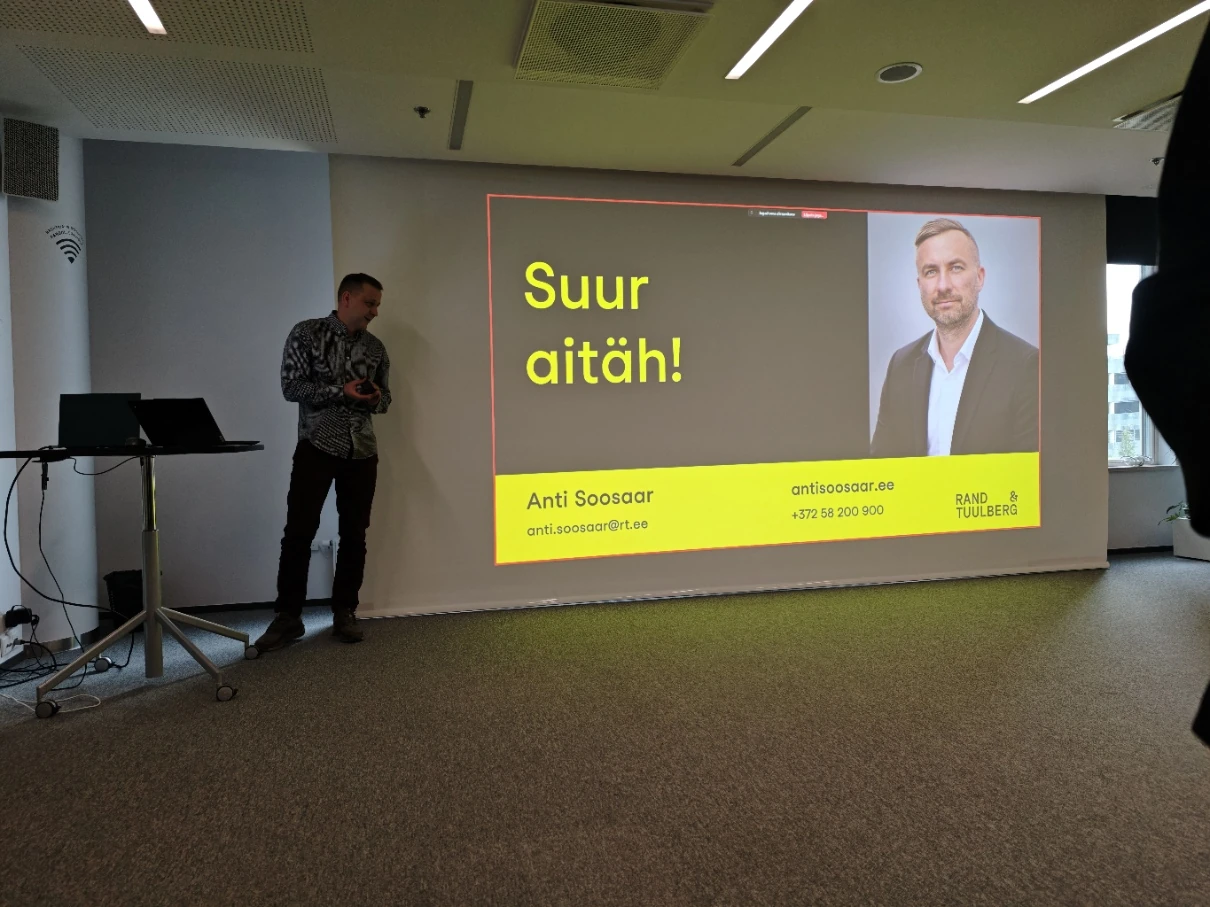
On 16 October 2026, I stood in front of a group to deliver AI training for the first time in a while. I had spent 75 days away from Estonia over the summer, so there had been a long break from teaching. It felt surprisingly good to be back.
The session took place at the company where I do much of my work with AI. I talked about what I had been testing, what had changed over the summer and which solutions were already in use. In the practical part, employees and managers who use those solutions shared their experience too.
The 22 survey responses collected after the training gave it an average usefulness rating of 4.68/5. Confidence in trying what they had learned at work averaged 4.64/5. That was lovely feedback to read.
A summer break and the first session back
I was away from Estonia between June and September. I had already started turning down training requests before leaving, and received around 15 enquiries over the summer. I told people that if they could wait until autumn, we could pick up the conversation then. If they needed training sooner, I had to say no.
I had expected more enquiries, but summer is holiday season and I had not been actively advertising. So there was a longer gap between training sessions, even though I kept working with AI and trying things out.
That made it particularly enjoyable to be back in front of a group. I had plenty to show and talk about. Even better was seeing people’s surprise when they realised that a task could be approached in a way they had never considered.
Theory gives context; practice gets people asking questions
For me, AI training needs to lead to something people can use in their work. General discussion alone is not enough. I want to show what we have tried and how it works in the workplace.
This time, I gave the theoretical introduction. The practical part followed, with employees and managers sharing their experience. I will keep the details of those internal solutions within the company.
It was clear that the practical side sparked a lot of interest. Seeing a colleague already using a solution immediately creates a connection to your own work: where could this help me?
I still make time for the theoretical introduction. Without that context, practical examples quickly raise questions: how is this possible, what do I need and how do I assess the result? The introduction helps people understand what they are seeing. Practice gives it substance.
AI training feedback: 22 responses
I put together a short feedback survey after the session. I wanted to know how useful the day had been for people’s work and how confident they felt about trying what they had learned. The table below shows the results available in the summary report for the 16 October session when I wrote this article.
| Measure | Result |
|---|---|
| Responses submitted | 22 |
| Usefulness for the respondent’s work | 4.68 / 5 |
| Confidence in trying what they learned at work | 4.64 / 5 |
On the usefulness scale, 1 meant “not useful” and 5 meant “very useful”. On the confidence scale, 1 meant “I still need support” and 5 meant “I am ready to try”.
17 of the 22 respondents gave the training the highest usefulness rating. Including those who gave it a four, 20 respondents rated its usefulness four or five. After a long break from training, I found that very encouraging.
These figures describe the views of the people who responded to this session’s survey. How they put what they learned into everyday use will become clear over time.
Practical exercises were the most requested next step
I also asked what would help people build on what they had learned. Practical exercises were the most popular choice, selected by 14 of the 22 respondents. That fits with what I saw during the session: people were interested in trying things for themselves.
| What would help next? | Responses |
|---|---|
| More practical exercises | 14 |
| Quick guides and example prompts | 10 |
| Help building workflows | 8 |
| Individual guidance | 8 |
| I can continue independently for now | 4 |
Each respondent could choose up to three options for this question, so the total number of selections exceeds the number of respondents. I am not publishing the free-text responses here.
Positive feedback is rewarding, but knowing what people need next is just as useful. Exercises, quick guides and help building their own workflows give me a clear direction for what comes next.
It was good to teach again
After 75 days away from Estonia, this was a very good start to a new season of training. I enjoyed talking to people face to face again, hearing their questions and seeing which possibilities surprised them most.
If you would like practical AI training for your team, take a look at my AI training for teams. We start with your work tasks: cover the background you need, try out solutions and learn how to check the results.